Project Context
For high-speed rail bridges operating at expected speeds of approximately 250 to 300 kmph, the accuracy of welded structural components is critical to bridge stability. Unlike conventional railway bridges, even small gaps between welded members can induce vibration in the bridge structure under dynamic train loads.
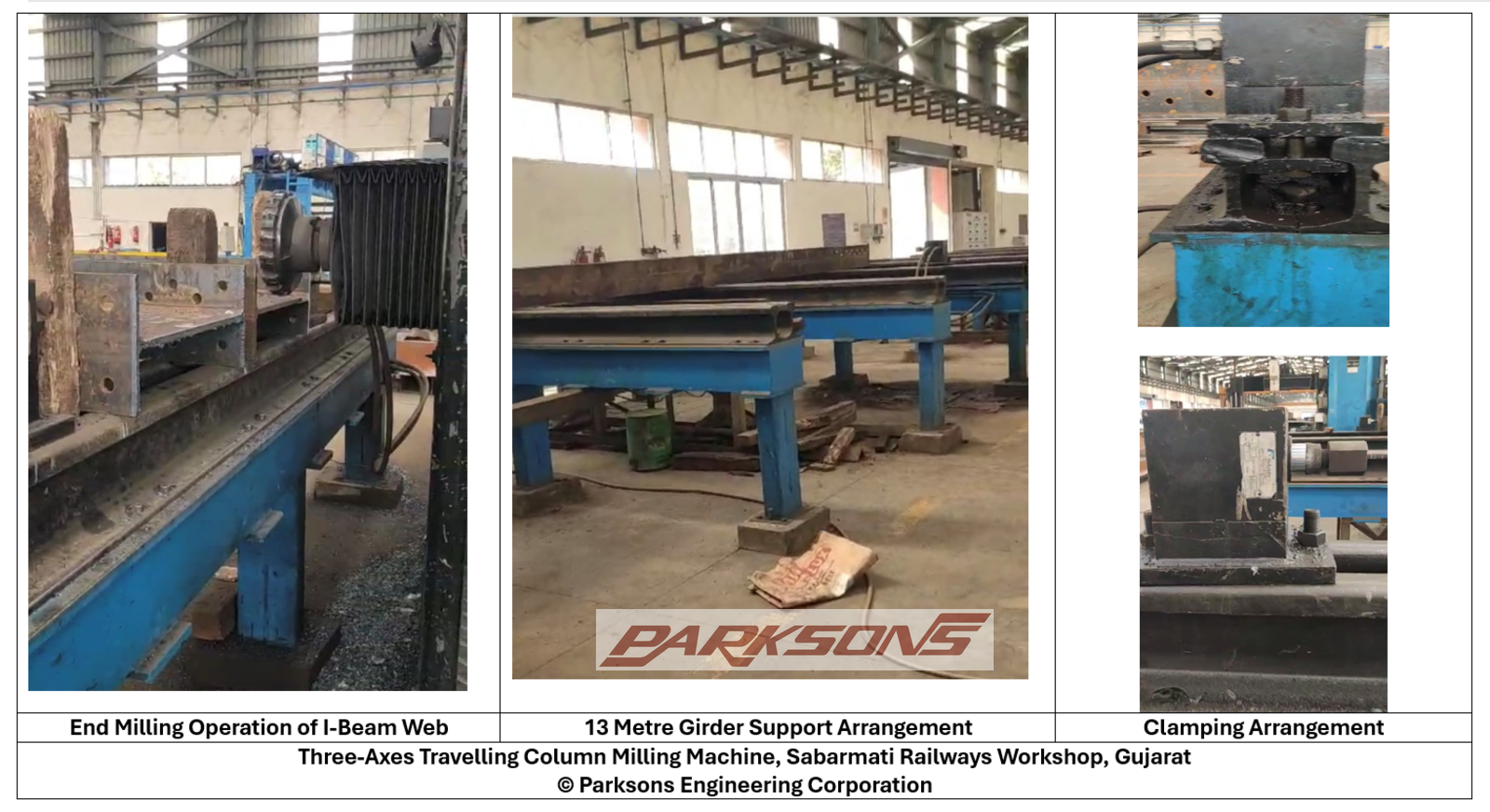
Long structural steel H-beam girders used for bridge construction required precise weld-edge preparation to minimise gaps and limit vibration of the bridge superstructure during operation.
The machining had to be carried out at the Sabarmati workshop under strict constraints on available space, electrical power, and foundation loading.
Parksons’ Role
Parksons configured and supplied a highly specialised structural end-milling solution capable of achieving the required weld-edge accuracy and repeatability for long bridge girders, while remaining fully compatible with the workshop's infrastructure constraints.
Scope of Delivery
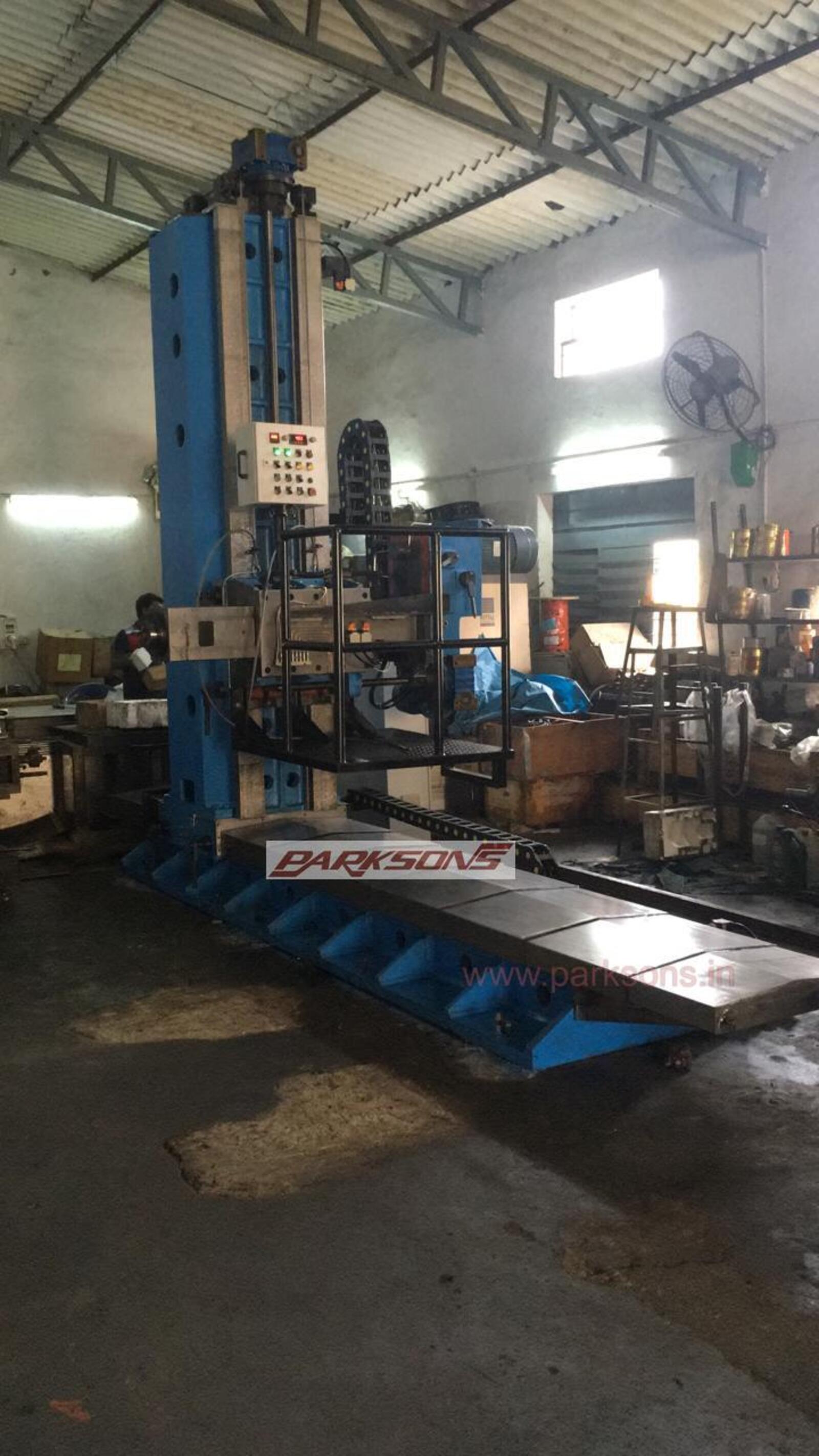
Parksons supplied a travelling-column structural end-milling machine, strategically selected for machining long girders with the job rigidly clamped on a fixed mounting table.
Key Technical Parameters
Client Outcome
The project achieved machining capability aligned with the stringent weld preparation requirements of high-speed rail bridge construction. This ensured structural stability of welded bridge components under dynamic loading at operating high speeds, within the infrastructure limits of the Sabarmati workshop.
A conventional 13-metre double column planomiller (~90 HP) was deliberately avoided. The selected travelling-column configuration significantly reduced power demand and foundation loading while remaining sufficient to achieve the required weld-edge flatness and repeatability.
Project Details
- Sector Infrastructure / High-Speed Rail
- Region Western India
- Client National High Speed Rail Corporation Limited
- Consultant / Inspection RITES Limited
- Contract Model EPC Supply (via HYT Engineering)